
Biography
Poésie Noire are a Belgian band that rose to prominence in the mid-1980s. Their Belgian origins and tendency to develop a goth-oriented, synthetic, gloomy universe with low-pitched voices – Poésie Noire could translate by “Black/Dark Poetry” – had them categorized as EBM, along with other Belgian members of the 1980s electronic music scene like À;GRUMH... or A Split-Second. However, much in the manner of various renowned Belgian EBM bands like The Neon Judgement and, to some extent, Front 242, they declared, through their music, a will to step away from the usual industrial aggressiveness that characterized Electronic body music and developed a more mainstream accessible dark pop sound that helped them to be regarded as plain new wave or dark wave.
Band members
Initially based on seven members, Poésie Noire rapidly boiled down to just three hardcore members so as to be finally incarnated by Johan Casters aka “La Bête Noire” – “The Black/Dark Beast” – (writer, composer and main male singer of the band), Marianne Valvekens (co-writer, female vocalist up… to the 1991 Marianne album – and then back on Sense of Purpose – and keyboard player) and Herman Gillis (co-writer and mainly the band's guitar player.) As Poésie Noire's fanbase grew along the years, Casters and Valvekens were soon to be given 'status nicknames' (probably in tradition of some typically “Goth-spirited” symbolical hierarchy.) Consequently, it did not take long for Casters to be considered the band's “Master” to the fans whereas Valvekens became their “Goddess”.
In 1991, Irish vocalist Evanna joined the band for the Marianne album because producer Ludo Camberlin did not feel that Valverken's voice was right for the album and Evanna's had more warmth and soul to it.
Career summary
Little is known about how the band actually started their career in music. They are known to have won the 1985 Breekend Rock Festival (a long-lasting, reputed festival set in Bree, Belgium, that hosted large amounts of well-known bands such as The Smiths in 1984 or even Slade in 2009). The following year, Poésie Noire started supporting Dead Can Dance and The Sisters of Mercy on tour, along with their own personal gigs. Along their years as Poésie Noire, the band demonstrated qualities as an act with releases : in just seven years, Casters, Valvekens and Gillis recorded nine albums and mini-albums, two official best of compilation, one remix compilation and 15 singles, which allowed them to appear on various EBM or new wave compilations and become genuine figures of the kind throughout their sphere of influence.
TBX
By 1992, it seems the relations between Poésie Noire and their label, Antler-Subway, were not as sound as they used to. Indeed, the record label promised the band they would release yet another album of the band's composition entitled Delirious, but this never happened and Antler-Subway finally released Casters, Gillis and newcomer Evanna from their recording contract instead.
With the help of Ludo Camberlin aka Carl S. Johansen, who had been their producer since the 1989 album Love is Colder than Death, Poésie Noire changed their name to TBX (To Be eXcited) and signed to larger label EMI Belgium that enabled them to release this Delirious album which had been the source of so many issues and changes. But unfortunately for the band, this new beginning rapidly ended up unsuccessful – because the band's "music [was not] meant for [the] mass consumption [that EMI was used to aiming at]", their official site explains – and led EMI Belgium to delete TBX from their catalog promptly afterwards. Consequently, for Poésie Noire/TBX', the bell tolled although they finally returned in 2010 with a new album, Sense of Purpose.
Sense of Purpose
More than a decade after the band split, they formed again and started working on a new album, Sense of Purpose, finally released in October 2010 under the name that made them famous, Poésie Noire.
The release of this new opus went along with Poésie Noire taking part in the Sinner's Day festival, on 31 October 2010, together with such prestigious artists as Heaven 17, Nina Hagen, Marc Almond, The Psychedelic Furs, Echo & the Bunnymen, Peter Murphy, The Selecter, Department S, Marky Ramone, Jah Wobble or Young Gods.
Source: Wikipedia (CC BY-SA licence)
Current members
Former members
3Discography
| Artist | Title | Year | Format | Classification | Gem, favourite, must-listen | |
|---|---|---|---|---|---|---|
 | Poésie Noire | En Grande Colere (Seven Tales Of Schizophrenia) | © & ℗1988 | Vinyl LP, Mini-Album | New Wave / Cold Wave / Goth | |
 | Poésie Noire | Existential Despair, Methaphysical Distress, Ontological Ungludation And Cosmic Meltdown | ℗1988 | CD Compilation | New Wave / Cold Wave / Goth | |
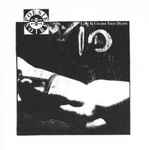 | Poésie Noire | Love Is Colder Than Death | © & ℗1989 | Vinyl LP, Album, Stereo | New Wave / Cold Wave / Goth |
33Songs
| Song | Year | Records |
|---|---|---|
| Aura Of Sadness | 1989 |
|
| Beat About The Bush | 1988 | |
| Crisis Of Our Age | 1988 | |
| Dark Honeymoon | 1988 | |
| Deja Vu | 1989 |
|
| Earth (Material Version) | 1988 | |
| Fait Accompli | 1988 | |
| Gioconda Smile | 1988 |
|
| Hiroshima | 1988 | |
| Homecoming | 1988 | |
| Icicle | 1989 |
|
| Love Is Colder Than Death | 1989 |
|
| Mirror Man | 1988 | |
| Mohenjodharo | 1988 | |
| Moral Majority | 1988 | |
| No Beach | 1989 |
|
| Oblivion | 1989 |
|
| Ocean Of Tears | 1989 |
|
| Poesie Noire (Live In Rennes, France) | 1988 | |
| Restraint | 1988 | |
| Spiral | 1989 |
|
| Starvation Of A Mind | 1988 |
|
| Taste Of Candy | 1989 |
|
| The Gioconda Smile | 1988 | |
| The Raising Up | 1988 | |
| The Song Of Innocence | 1988 | |
| The Vocal Fight | 1988 | |
| Tristes Tropiques | 1988 | |
| Trophy | 1988 | |
| Turn Turtle | 1988 | |
| Untergang Des Abendlandes | 1988 | |
| Vow Of Silence | 1989 |
|
| Weltschmerz | 1988 |